بازگشت به پا به پا شدن برای حمایت از دیگران
۲۳ اکتبر ۲۰۲۶
Matthew’s journey brought renewed strength, meaningful connections, and a desire to help others
What do you love most about walking?
Is it the effortlessness of it? The freedom? The fresh air? Matthew Seno liked all of that. In fact, he liked it so much that often on any given week he covered almost 60 miles on foot.
Granted, he was playing his favorite game, Pokémon Go. But never once did he ever think about it being taken away.
Then, it was.
In March 2025, the 47-year-old experienced a serious health crisis and found himself in the intensive care unit (ICU) for a month.
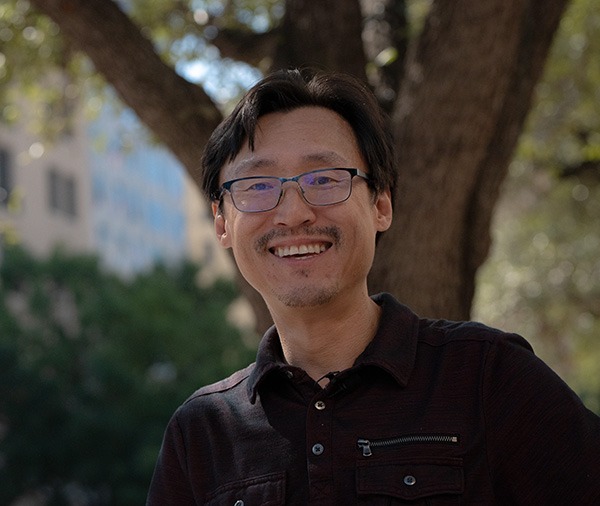
Pretty quickly, his life changed completely. He lost his apartment and most of his possessions. His physical state led physicians to diagnose serious health conditions, and those diagnoses led him to understand parts of him that were, until then, unknown.
Worse, he couldn’t walk.
Seno enrolled in MAP (the Central Health Medical Access Program), a health care option for Travis County residents with low income, then he was moved to a skilled nursing facility where he began his rehabilitation. Once discharged, he entered the Austin Resource Center for the Homeless (ARCH) and eventually was led to Central Health’s medical respite center, where he was the medical specialty’s first resident.
Seno never needed to question his purpose. He was healthy, had a job, a good life.
Then, before he knew it, he was in counseling and group therapy sessions.
“All of a sudden, it was peer speaking with other peers,” Seno said.
Soon enough, he began to work himself out of that hole.
Early Beginnings
Before arriving in Travis County in 2018, Seno had the trappings of a traditional American life. After being adopted at the age of five from South Korea, he was raised in Pennsylvania, where he learned music and competed in sports.
In 2003, he graduated from Penn State University with a degree in electrical engineering. While in college, he played guitar in a band and once opened for the American rock band Lit. “Our band was unique, because everybody sang,” he said. Seno eventually moved to Austin for a job. He built a career and delved into passions like DJing.
Then came harder times, Seno says. By 2025, he was in a bad state. “I just remember one day wandering off,” he said. “Next thing I know, it’s raining and I’m wearing shorts and no shirt, and it’s freezing cold.”
Seno was admitted to Dell Seton Medical Center and placed in the ICU. He was severely malnourished, could not walk, and was diagnosed with COVID. “When I got to the hospital, I was only 92 pounds,” Seno said. “I couldn’t control how my arms moved and head moved. I even lost my voice.”
He spent 30 days in the hospital before his road back to health began.
“I just remember one day wandering off. Next thing I know, it’s raining and I’m wearing shorts and no shirt, and it’s freezing cold.” – Matthew Seno
Accepting Care, And Giving Space
By April, Seno was admitted to Heritage Park, a skilled nursing facility where he ambulated with the use of a rollator (a wheeled walker). It was there that he received behavioral health counseling for the first time.
There, he met Laura Evanoff, a Central Health clinical behavioral health counselor.
“When Matthew came into skilled nursing,” Evanoff said, “he was really confused about what happened. He had experienced a lot of loss—the loss of his mobility and housing. This was the first time he experienced a significant medical event or crisis.”
Evanoff introduced herself and sat down. She gave Seno a space to process what happened to him.
“A lot of people come into care with Central Health and have a distrust of the health care system,” Evanoff said. “We allow them to be who they are and really focus on their interests and what brings them joy. They’re under care for a reason, and so it’s about providing them with hope because a lot of times they feel pretty hopeless.”
Providing care for Seno’s mental health was an important piece to his journey.
Early on, he met with Evanoff once a week.
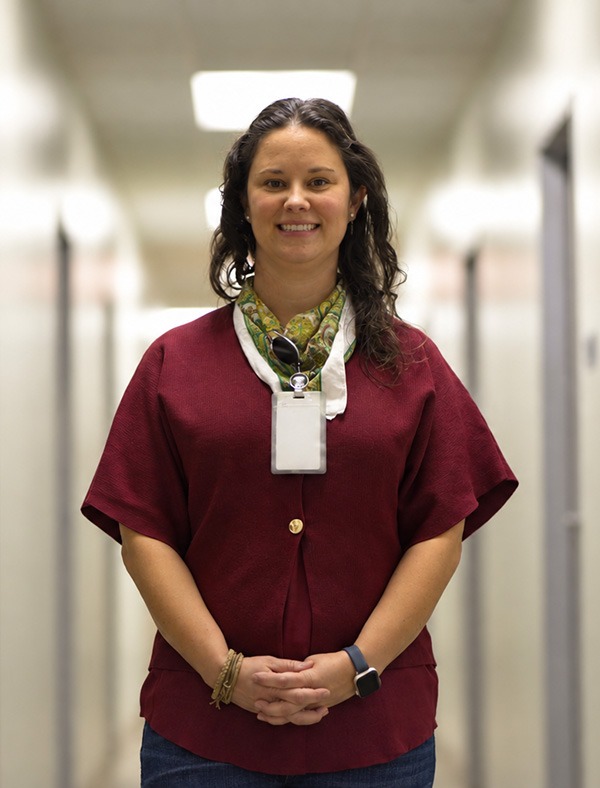
“I think working with Laura, especially at the beginning, was important,” Seno said. “I had basically given up on everything. It was to get me to a point of making baby steps. I didn’t have a clear head, and she wanted me to refocus.”
Evanoff guided Seno around the idea that life didn’t have to be so linear. It was complex. Struggles and overcoming adversity are part of what make you human. When Seno was discharged from Heritage Park, he entered the ARCH and then was admitted into medical respite in July 2025. Evanoff traversed that road with him.
Her care was a consistent staple in his life.
“I think one of the biggest things that he learned was community and what belonging looked like,” Evanoff said. “Especially when you have this vision of what your life will look like, and then things change. He learned a lot about different people and their experiences just by having shared living environments from people of all different walks of life.”
A Group Setting, And A Positive Impact
Through counseling, Seno’s outlook began to change. “Sixteen years of not building personal relationships, I didn’t know how to talk with people about stuff,” he said. “Inch by inch, (Laura) brought that out in me.”
So did group counseling sessions.
Now sitting in the company of his peers, Seno engaged through their experiences. He shared his own and often made connections that provided deeper insights into his own behavior.
“Even in group counseling, he would make a lot of effort to engage with other participants, include them in conversation, relate to them, and connect with them,” said Carly Michelakis, an integrated care social worker in behavioral health with Central Health.
“He was really kind of reflective of his journey here and open to a lot of the growth he had experienced being a part of this program.”
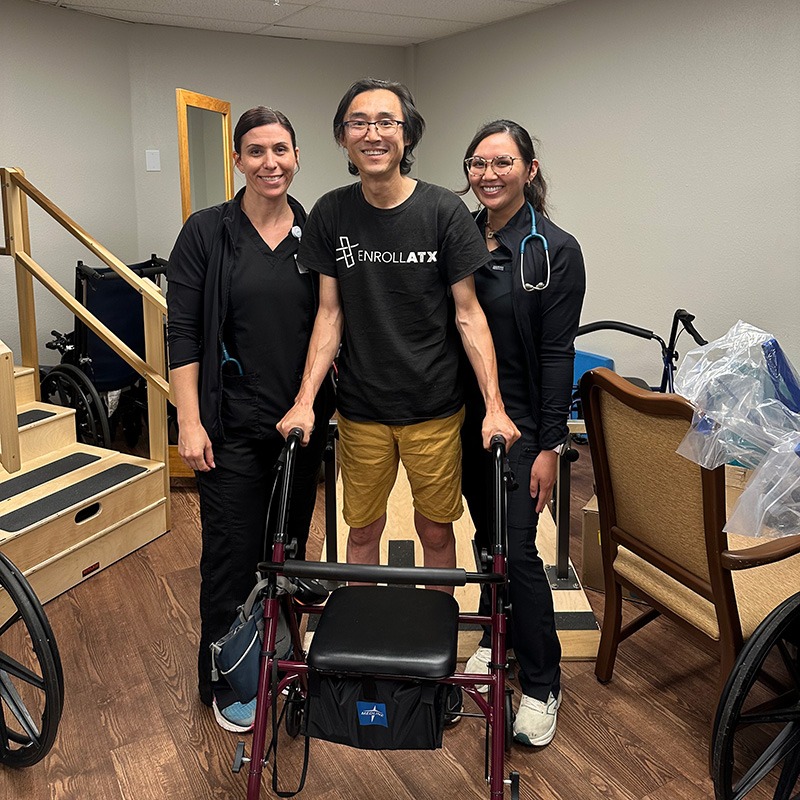
At medical respite, Seno formed relationships and offered help where he could—from fixing phones to televisions. Seno’s physical wellbeing began to improve, too.
Through rehabilitation, he gained the strength to walk again.
“He’s like the mayor of anywhere he’s at,” Seno’s former Central Health case manager, Amy Kempe, said. “He was always looking to help his fellow peers.”
By the end of his stay in medical respite, Kempe worked to secure social security and disability income. The Central Health case management team then helped to qualify for permanent supportive housing through Foundation Communities, a nonprofit organization in Travis County that provides affordable housing.
The Road Forward Begins
As life began its way up, Seno started to drill back into his passions.
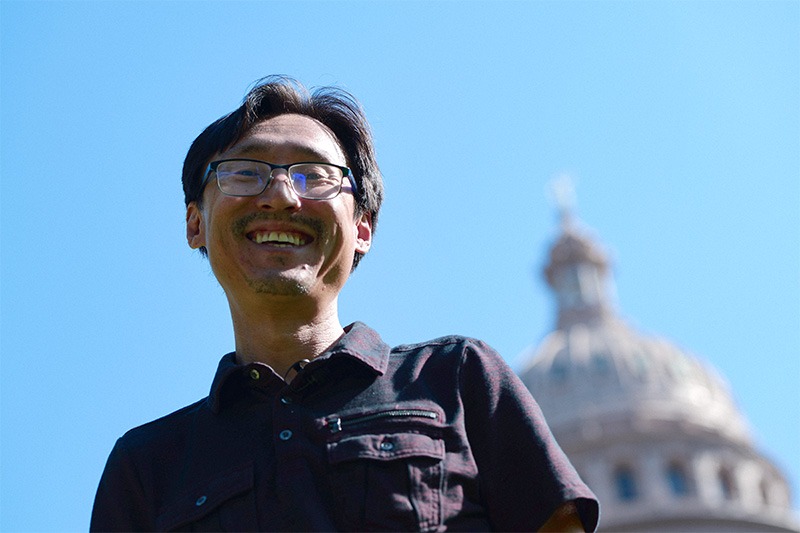
During a recent morning in downtown Austin, Seno stepped outside his apartment and made his way toward the Capitol.
On the way, he thumbed his phone and opened Pokémon Go.
Amid his road back to health, Seno often played the popular online game as a way to set goals. “There are mornings when I wake up and maybe my legs are feeling weaker,” Seno said. “That’s where I have to have the self-drive to get out and do something.”
What it ended up providing Seno was much greater.
The combination of physical and mental stimulation buoyed his return to health and ultimately gave him a sense of peace in his life.
And so when it comes to the future, Seno is hopeful. While he’s already secured a part-time job as a pharmacy technician, he also wants to give back some day.
He so valued the support he received through Central Health, his goals are now to become a peer support specialist for those experiencing trauma and hardship.
Best yet, he’s back on his feet.
“I’m not religious, but I like to believe that the way you live your life comes back in return,” he says. “I try to be the best person I can be. I feel like, I got way more than I deserve back.”