35 Years and Counting: The Impact of the David Powell Health Center
October 3, 2025
Named after a tireless HIV-AIDS advocate, the clinic first opened in 1990 and has become a beacon of hope in Travis County.
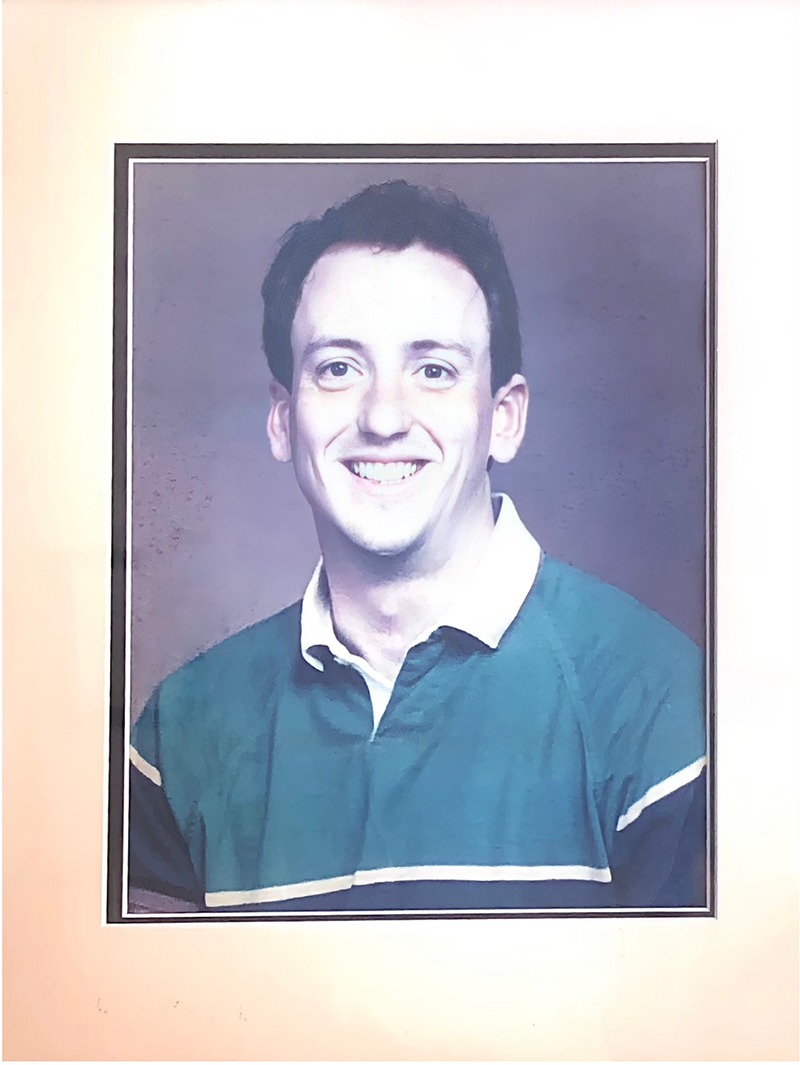
The late David Powell was driven by a dream in the late 80s that any person diagnosed as HIV positive could get the treatment they deserved—and better yet, a chance at a new life. While the 33-year-old died from AIDS-related complications in 1989 and never experienced the life-changing medical treatment and care that helps HIV-positive people today, his vision did become a reality.
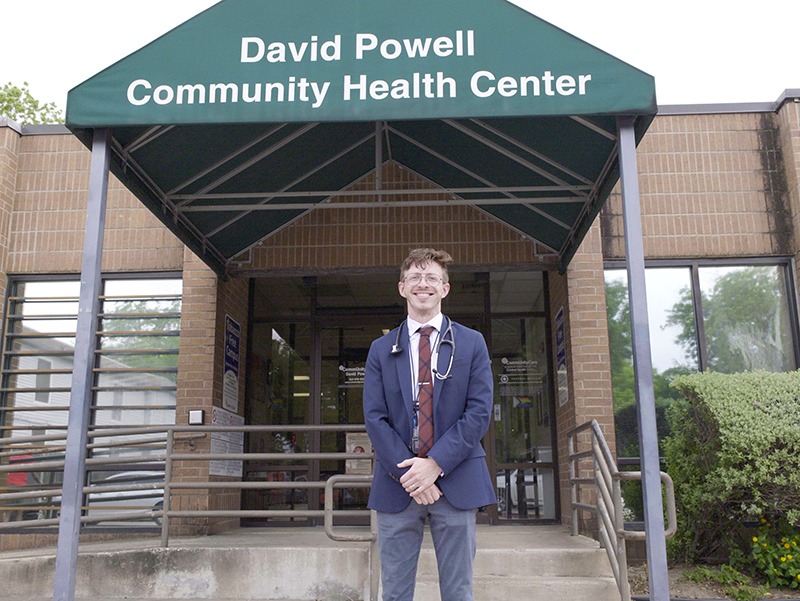
Tucked away about a hundred or so feet from Interstate 35, about five miles northeast of Austin’s downtown, CommUnityCare’s David Powell Health Center has for decades screened for, diagnosed, and treated individuals living with HIV and AIDS.
Thirty-five years ago, the clinic was founded through a consortium grant partially orchestrated by Powell, a HIV services program manager who was focused so exhaustively on his work that he often spent the night at the Austin/Travis County Health Department and sometimes slept on a couch inside his office.
Today, the David Powell Health Center, which is moving to the Central Health system’s new headquarters at the Hancock Center in 2026, remains a beacon of HIV care in Travis County, annually treating and providing care for just over 3,000 patients with HIV and AIDS a year.
“I think behind every great institution are people who were great themselves,” said Alfonso Carlon, 62, a former HIV testing counselor whose career spanned decades in Travis County and knew Powell personally. “People like David saw the potential in others and wanted to make a difference.”
The Importance of The David Powell Clinic
When the AIDS epidemic first began in the early 80s in New York City, health organizations across the country were forced into action. Two years later, in 1983, the city of Austin saw its first reported case, about two years after the Centers for Disease and Control first began disclosing statistics around GRID, which was originally labeled the “gay-related immune disorder.” The Austin/Travis County Health Department worked tirelessly toward a solution.
By 1990, the David Powell Health Center became that response. It was the first clinic dedicated to HIV/AIDS care in Central Texas—though it also joined the AIDS Services of Austin, which first opened in 1984 as the Austin AIDS Project and offered HIV services. Central Health Board of Managers Vice Chair Dr. Cynthia Brinson said the David Powell Health Center was the first clinic in Austin dedicated to hiring physicians to combat the disease directly. She was a resident in-training in 1991 during her first tenure at the facility.
“We practiced what I always call ‘Cowboy Medicine,’” said Dr. Brinson, who worked at the David Powell Health Center over two different stints in the 90s and 2000s and later founded The Kind Clinic of Austin, which focuses on treatment of HIV. “We would do anything we could to treat someone. We would try all sorts of things to try and keep somebody going.”
In 1991, a universal symbol in the AIDS fight arrived in the form of a red ribbon, which led to global support and transformative treatment plans. Five years later, as antiretroviral medicines were becoming the standard of care, AIDS diagnoses were declining for the first time.
The David Powell Health Center soon began serving well beyond its walls and outgrew its original location at the RBJ Health Center, moving to a small space in a former community center in the Clarksville neighborhood of West Austin. Then, at the turn of the millennium, it moved to 4614 North Interstate 35.
Over the next two decades, as the health center continued to serve Travis County, screen tens of thousands of patients, and incorporate groundbreaking preventative treatments like PrEP—known as pre-exposure prophylaxis, a medicine people at risk for HIV take to prevent getting HIV from sex or injection—it implemented a robust care model. The David Powell Health Center continues to serve thousands of HIV- and AIDS-positive people in Central Texas and beyond every year.
“We are honored to work with the team at the David Powell Health Center,” said Ricky Astray-Caneda, the president of the non-profit Friends of the David Powell Clinic, which was established in 1994 and helps raise funds for HIV care in Central Texas. “We really watch them put their heart and soul into helping patients.”
What’s Ahead
In 2025, the David Powell Health Center serves 10 counties through the Austin Health Service Delivery Area (HSDA), which includes, among other regions, Bastrop, Blanco, Burnet, Hays, Travis and Williamson counties. That far-reaching impact has made an immense difference.
According to most recent statistics, over 7,600 people are living in Austin with HIV. On top of that, one in seven are unaware of their HIV status in Central Texas. To work toward alleviating these issues, the David Powell Health Center has tried to make HIV screenings as routine as a doctor’s visit.
“One of our main goals is sharing the message U=U, which stands for undetectable equals untransmutable,” said Crystal Walker, the Associate Director of Sexual Health at the David Powell Health Center. “That means that if someone is undetectable, they cannot transmit HIV and when they can’t transmit HIV, then we get closer and closer to ending the HIV epidemic.”
How Sexual Health Makes a Difference
The model for care at the David Powell Health Center has been its shining star, helping patients move through the system to find answers. Along the line, a patient will meet with a social worker to discuss needs, an eligibility screener to understand access, and then a primary care provider to nail down care. The last step is treatment, and the clinic handles that, too, through its built-in pharmacy.
“People like David saw the potential in others and wanted to make a difference.” – Alfonso Carlon, 62, a former HIV testing counselor
“I think in many ways, the David Powell model is one that a lot of us have tried to emulate,” said Brandon Wollerson, a former practice administrator at the David Powell Health Center who’s now the senior director of philanthropy at Vivent Health, a local HIV/AIDS treatment and social services center. “It’s a complete, integrated-care model.”
That type of consistency has kept patients coming back, said Walker.
One of them is Travis County resident Dale Thele, who was diagnosed with AIDS in 2012. A member of the Central Health Champion’s program, Thele’s been a patient at the clinic for over a decade. What the 69-year-old has seen over his 13-year tenure with the David Powell Health Center, he said, has been a steady growth in awareness.
“The number of Lyft drivers who have taken me to the clinic, they’ve been really positive about the work being done here,” Thele said. “And that surprised me, because it was a statement that I didn’t expect.”
Dr. Brinson says the David Powell Health Center remains a vital health resource in Texas, especially for HIV-positive people located in rural communities who need care.
“I think they’re still ahead of their time,” she said.
Erasing Stigma Through Care
For over a decade, the David Powell Clinic has also taken a leading approach to reducing stigma in HIV care, often piloting new methods. By 2012, it had tested over 17,500 patients for HIV/AIDS, identifying 11 cases of HIV. That success was a breakthrough in the care model, eventually leading to greater scope and investment from CommUnityCare networkwide.
Six years later, the Central Health Policy Council approved a five-year HIV screening campaign adopted by five health care systems over a period ending in 2023. The campaign’s goals included broadening screening practices across Travis County and securing consistent measures to reduce stigma. By the end of the program, HIV screening rates for Medical Access Program (MAP) and MAP Basic patients in Travis County were found at rates 64% higher than the state average and 84% greater than the national average.
Over a two-year span in 2023-2024, CommUnityCare screened over 47,602 patients for HIV, finding 52 newly diagnosed cases. Over 88-percent of those patients were linked to care within 30 days.
Changing Through Different Eras
In 2025, the clinic not only provides care for HIV and AIDS, but it also secures various wraparound services, from transportation to food insecurity to assistance for health insurance premiums—many times funded via efforts by non-profit organizations like Friends of David Powell.
This is what provides life-changing impact, Walker said, because these services ultimately work to bridge a patient back to normalcy.
“When you’re a patient who doesn’t have a place to live,” Walker said, “or you don’t have food to eat or a place to take a shower, it’s very hard then to stress the importance of taking a medication. It’s very impactful to see what influence we have on patients when we can provide those services.”
The Future Forward
Thirty-five years after its opening, the David Powell Health Center continues to chase after the goals it first began with: to successfully screen, diagnose, treat and care for as many people with HIV and AIDS as it possibly can.
Despite forward progress being made, HIV transmission remains a core issue in the United States. In 2022, roughly 38,000 people were diagnosed with the disease, including 331 new cases in Travis County, according to an AIDSVu report from 2022. With Central Health’s new Hancock Health Center and system administrative offices scheduled to open in 2026, the David Powell Health Center will receive a warm welcome in the heart of Austin.

“A new clinic, the same great treatment,” said Dr. Brinson. “This is what we’ve been waiting for.”
In fact, when someone Google’s information on the clinic, they might just find a picture of David Powell, the former social worker whose dream to help others through HIV treatment was realized.
“Part of the way we honor (David’s) legacy is by A. remembering it,” Wollerson said, “and B. by not repeating the environment that the clinic was created in. We must continue to remind people that HIV is still a very real and present issue.”