A Heart Back on Track
February 12, 2026
A connected health system helped Carl reclaim his cardiovascular health
Carl LeBlanc survived on the streets for as long as he could. Until the day he couldn’t.
Years of drug abuse, the loss of his wife, and a world without guardrails caught up to him. His back and heart were broken. Literally.
“I thought to myself,” Carl said, “‘I’m at the mercy of whatever happens.’”
Luckily for the 55-year-old, what he experienced next was lifesaving.
From that point forward, he said, he took steps to address his many challenges, from drug addiction to congestive heart failure. On the heels of American Heart Month, which serves as an annual reminder that heart disease remains the leading cause of death in the US, Carl took charge of his heart health when he needed it most. He trusted the Central Health system to navigate him on his road back.
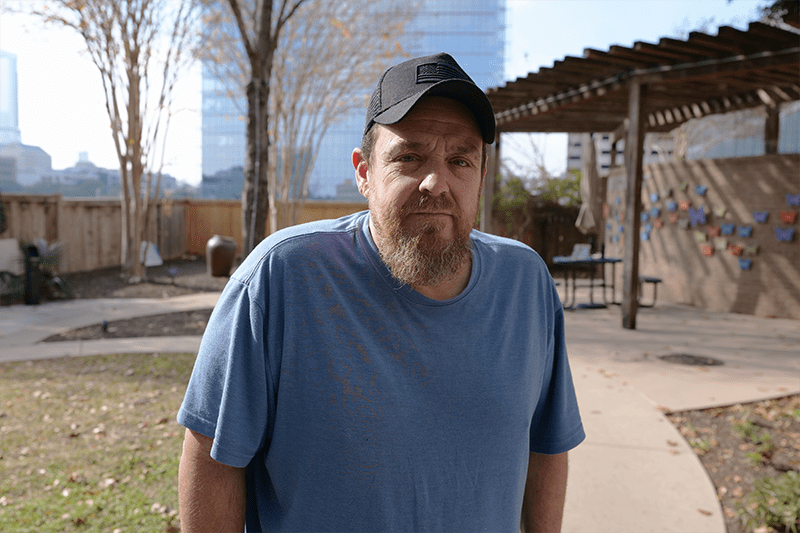
“I now look forward,” he said. “Before, I didn’t care. It didn’t mean anything to me. If I had a heart attack and passed away? OK. I was ready for it. But now I look forward to what that next day is.”
Where Problems First Began
After Carl lost his wife, Amy, in 2022, his life changed completely.
“My whole world just came crumbling down,” he said. “I went off the deep end.”
He continued to use anything, and everything.
“I tried to cover up the pain and the loss through that,” he said.
Carl tried to survive on the streets on his own.
The bigger problem, however, was that his drug usage impaired his ability to move and damaged his heart. He couldn’t walk a few feet to the bus stop. For that matter, he couldn’t stand on his own two feet for longer than a few minutes.
Over the years, Carl received five stents. He believed he was on the verge of his fourth heart attack.
“I just did not feel good …ever,” he said. “I did not feel normal.”
Then one day in August 2025, it got worse. Carl fell and couldn’t get up.
1. American Heart Month began in 1964 under U.S. President Lyndon B. Johnson. The awareness campaign became a national call to change the public’s view on heart health. Over six decades later, that mission continues (American Heart Association).
2. Heart disease is the leading cause of death for men, women and people of most racial and ethnic groups. In 2023, almost one in every four deaths in the US was caused by heart disease (CDC).
3. High blood pressure and high cholesterol are the two main risk factors that can lead to heart disease (American Red Cross).
4. Health care services and medications from heart disease amounted to more than $168 billion between 2021 and 2022 (CDC).
5. For most people, coronary heart disease is preventable with a heart-healthy lifestyle, medication, and treatment (NIH).
A friend drove him to the Ascension Seton Northwest Emergency Room, where Carl eventually learned he had a herniated disc in his back and other lower back issues.
As bad as the pain was, though, it wasn’t the worst of his medical problems.
How Carl Found Health Care
In the weeks that followed, receiving surgery and healing from that back pain was foremost on his mind—not to mention the primary concern of his doctors. In the meantime, Carl sought help from Central Health, enrolling in the Medical Access Program (MAP), a health care coverage program for Travis County residents with low income.
Central Health connects people to affordable health coverage and provides a doorway to health care. The result for Travis County residents is proper access to doctors, management of chronic conditions, and help when they need it most.
Next, Central Health received a referral from the hospital to enroll Carl in a skilled nursing facility, a short-term option where he was overseen by a medical team before and after his surgery. A community health worker and case manager were assigned to oversee his care and schedule, and to ensure he made medical appointments with Central Health’s behavioral health care and cardiology teams.
Carl met with Dr. Darren Harrison, a Central Health cardiologist, and with Rubi Garcia, an advanced practice registered nurse (APRN), to learn about his ejection fraction, or EF, a heart failure measure that records the percentage of blood the left ventricle pumps out after each heartbeat. In Travis County, Carl was among 2,614 MAP enrollees in fiscal year 2023, according to Central Health’s most recent demographic report, diagnosed with heart failure. In 2023, according to the Centers for Disease Control and Prevention, nearly one million people died from cardiovascular disease.
But Carl was determined.
“Carl came in very motivated to change,” Garcia said. “He was receptive to all the education we provided in terms of his heart failure and the plan of treatment.”
When the cardiology team first met with Carl, his EF was 40-45%—below the threshold for a normal, functioning heart. It may have meant that he was on the road to a cardiac episode, perhaps even to a permanent heart transplant. It was one reason why Carl felt tired all the time.
“If anyone knows the idea of being 100% exhausted,” Carl said. “I knew it. It was the feeling of having no energy.”
The cardiology team at Central Health worked with Carl to understand his overall health, forming a plan to get him back on the right track. A series of medical treatments were paramount, including an FDA-approved drug that reduces the risk of cardiovascular health and hospitalization for heart failure.
Within about four months, Carl’s EF improved to “normal” levels.
Believing in the Process
Once alone on the streets, Carl now feels a sense of security. The Central Health system stepped in when things broke down and gave him a chance to change his outcome.
“He came in ready to heal,” Garcia said, “and he was open to all of the resources available.”
Carl says he’s been completely sober since October 14.
“I realized I was in real good care and that I would be stupid if I didn’t take advantage of this opportunity to get a second chance,” he said.
In the meantime, Carl, who is still recovering from back surgery, is being cared for at the Central Health Respite Center at the Clinical Education Center, a 48-bed medical facility for Travis County residents who have been discharged from hospitals, shelters or living in the streets. Case managers are working on helping him secure permanent housing.
Every day Carl is closer to living a healthier life, and with a healthier heart.
“People don’t realize how much going for a walk actually means when you can’t do it,” he said. “And now when you can? It’s a totally different perspective. It’s a blessing.”