How Food Becomes Care in Travis County
February 20, 2026
Partnerships connect nutrition to better health outcomes
AUSTIN, Texas—On a sunny day last October at Central Health’s Southeast Health & Wellness Center, Veronica King arrived promptly for her scheduled appointment with the Central Texas Food Bank’s mobile FARMacy program, an on-the-go food pantry for those experiencing food insecurity.
King had never really needed help in this way, but about a year earlier she lost her job and times had gotten tough, so she promised herself one thing: If there was ever a point to ask for help, she would do it.
“I humbled myself,” she said. “I put my pride aside.”
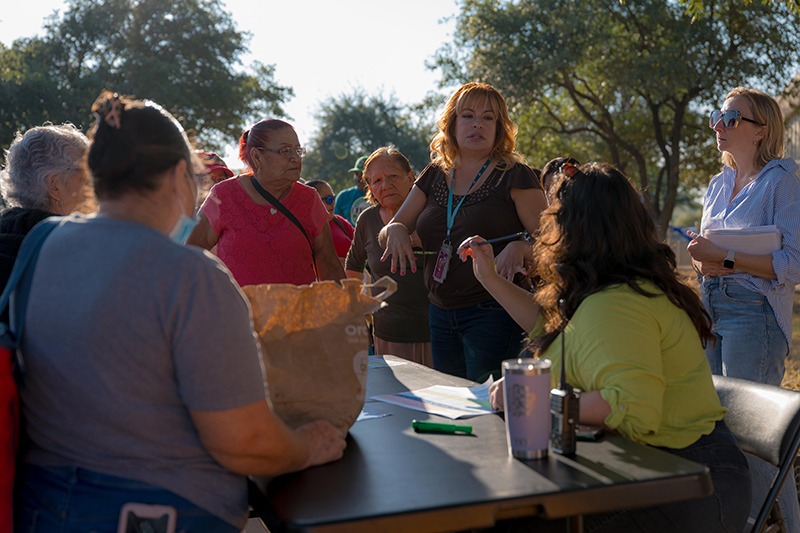
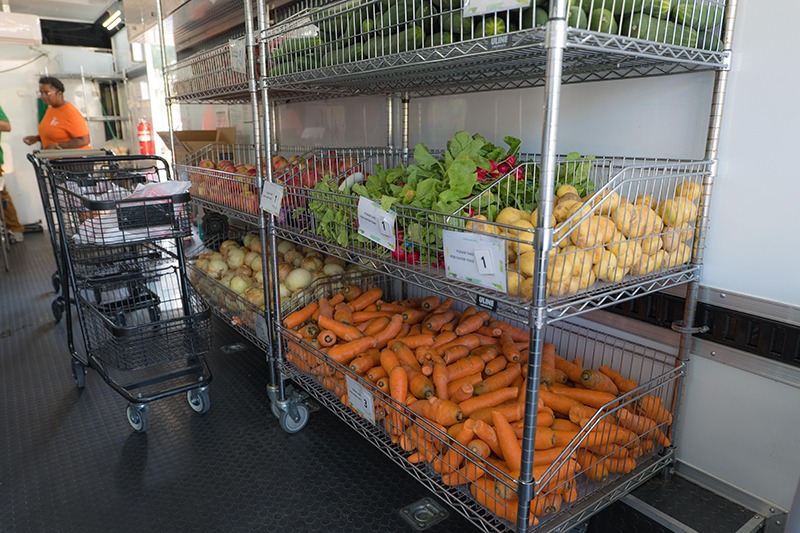
After enrolling in the Medical Access Program (MAP), Central Health’s health care coverage for Travis County residents with low income, a medical specialist referred King to the mobile FARMacy program. It was a collaborative initiative between Central Health and the Central Texas Food Bank that provided nutritious food at no cost at four Central Health clinics across Travis County each month.
“I’ve been coming here most of the year,” King said. “It’s been a blessing.”
What’s more, the program is making a real difference in Central Texas.
Along with critical rollouts like Central Health’s Medically Tailored Meals program and Fresh for Less Mobile Markets in Eastern Travis County, Central Health Food is Medicine programs are helping re-shape food access for thousands of people in Travis County.
Building Food Access
The mobile food pantry isn’t the only “Food is Medicine” plan in the works with Central Health. As part of the organization’s FY 2026 Year of Access, the Travis County Hospital District developed another initiative through its Community Health Care Investment Fund (CHIF).
According to Feeding Texas, Texas has the highest population suffering from food insecurity in the U.S., with 5.3 million Texans facing a severe lack of access. That number accounts for 17.6% of all Texans, or one in six households.
Last November, Central Health rolled out its medically tailored meals delivery service through its Community Health Care Investment Fund. The program is part of a larger initiative tackling food insecurity and provides access to food across the region—especially in Eastern Travis County, where food insecurity and access are growing concerns. The program is oriented around tackling food insecurity, managing chronic health conditions, improving overall health, increasing medical adherence, and working to reduce hospital admissions and ER visits. Patients are connected directly with a case worker and a community health worker over the term.
“One of our goals is to get people more familiar with foods that help better manage their chronic conditions while they are on the program,” said Megan Cermak, Central Health’s senior director of public health strategy.
In collaboration with the Central Texas Food Bank, which supports over 530,000 food insecure individuals each year, the program operates in eight-week increments for small cohorts referred by specialists. Additionally, fourteen frozen meals are available for patients with chronic conditions or malnutrition. The program is scheduled to continue for about a year, reaching up to 600 patients overall.
“I think we know when people have food insecurity, it impacts their health outcomes,” said Bella Kirchner, Central Texas Food Bank’s vice president of client programs and services. “It tends to be a cycle that just keeps going. And so really what we’re trying to do with this program, in partnership with Central Health, is to be as upstream as possible. If we can intervene with healthy, nutritious food, hopefully people are able to manage their health outcomes better, which will allow them to live healthier lives and thrive more.”
How The Program Works
The Central Texas Food Bank’s food team designed meals under the guidance of Central Health dietitians to specifically target chronic health conditions in patients. The foods were developed to be nutrient-dense, heart-healthy, renal-friendly, gastrointestinal-supportive, diabetic-friendly, and well-balanced.
The meals were also reviewed to ensure they adhere to medical guidelines and are relevant for people from different cultures in Central Texas. What’s more, each patient will receive patient education and recipe cards to help promote good health after their eight-week term ends.
“One of the primary goals of this program is to make sure the food is high quality, tasty, and nutritious,” Cermak says. “The primary goal is to serve patients with chronic conditions with care — food that’s applicable for someone with renal failure, or who’s diabetic, or for a patient who’s malnourished.”
Central Texas Food Bank is already delivering medically tailored meals across Travis County. While that may sound simple on paper, Cermak says, it’s necessary to access patients—whether at home, or in shelters.
“I think there are a couple of broken pieces in our system that this program is hoping to fix,” Central Health associate chief medical director Dr. Milinda Zabramba said. “I think it’s extremely important to screen for food insecurity. I also think it’s important to recognize that there is a direct correlation to health through good nutrition and better health outcomes.”
The Future of “Food is Medicine” in Travis County
In Eastern Travis County, which includes Hornsby Bend and Del Valle, there is no grocery store and many of its communities lack access to affordable and healthy foods like fruits and vegetables. Over time, that lack of access can lead to higher rates of chronic conditions such as diabetes, high blood pressure, and heart disease.
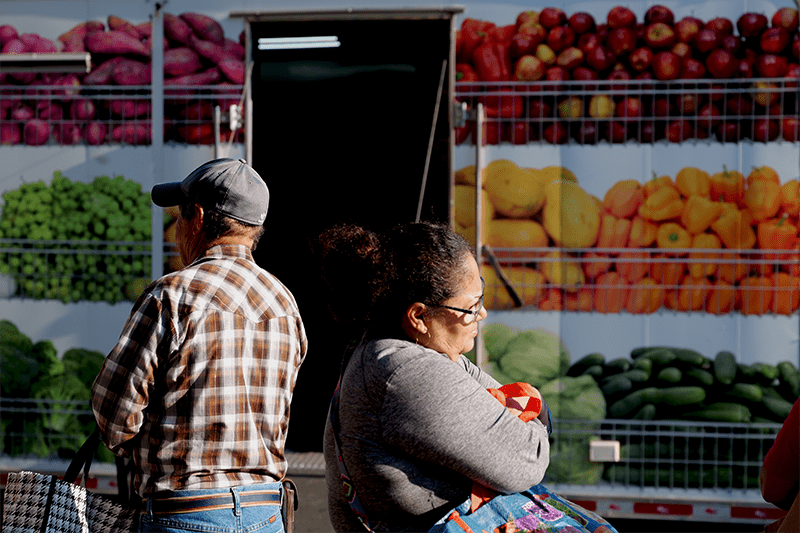
To close that gap, Central Health partnered with FarmShare Austin in 2017 to bring its mobile grocery markets to its health and wellness centers across Travis County—a low-cost program that is open to any resident of the area. Meanwhile, the Central Texas Food Bank’s mobile FARMacy program, which is totally free but operates by referral only, provides healthy food for hundreds of Travis County residents every month.
Most important is the urgency Central Health is showing toward food access. The goal is to provide access to those who need it most and strengthen links in the food system.
And for King, she sees one basic truth playing out in real time: It’s working.
“When I came here a year ago, I was nervous,” she said. “I had never been to a mobile food pantry … the staff is what makes it better.”