One System, One Vision: The Year of Access
October 9, 2025
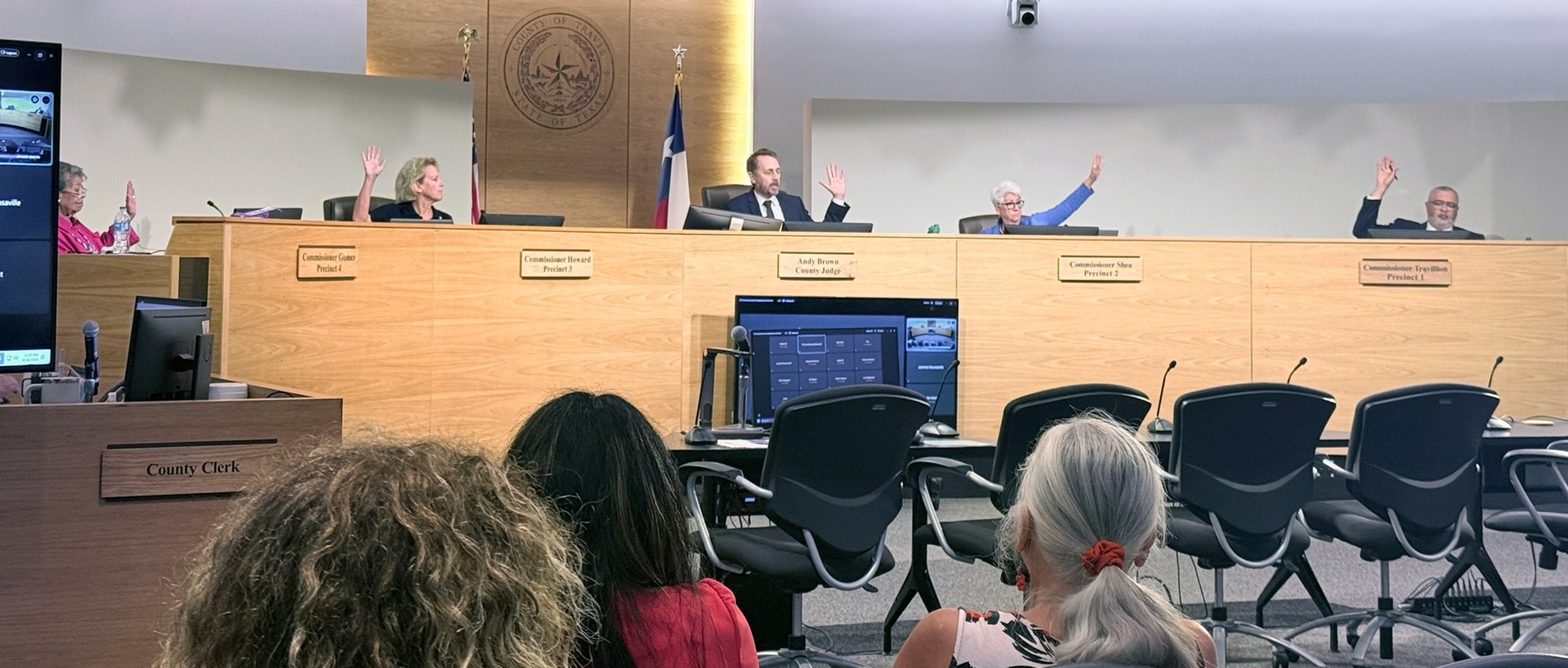
Travis County Commissioners voted unanimously on Sept. 16 to approve Central Health’s tax rate and budget.
When Travis County Commissioners voted on Central Health’s Fiscal Year 2026 tax rate and budget on Sept. 16, the proceedings were swift, and the response was emphatic.
“All those in favor, please raise your hand,” said Travis County Judge Andy Brown. “Passes unanimously. Thank you very much.”
The commissioners’ unanimous approval—for the second year in a row—signaled an extraordinary moment of unity and confidence in Central Health, a turning point years in the making.
“This moment didn’t happen overnight. It reflects years of listening, building trust, and working side by side with our partners and our community,” said Central Health President and CEO Dr. Pat Lee. “A unanimous vote tells us that the vision for an equitable health care system in Travis County isn’t just Central Health’s—it belongs to all of us.”
Just three years earlier, the commissioners narrowly passed the FY 2023 budget with a 3-2 vote amid public concerns about Central Health’s relationship with Dell Medical School at The University of Texas at Austin, financial reserves, and funding for Sendero Health Plans. Since then through careful planning, strong board leadership, and community engagement, Central Health rebuilt trust with the commissioners and the public.
“2026 is the ‘Year of Access,’” community health advocate Reyes Martinez told the Travis County Commissioners Court while testifying at the budget hearing in September. “The people of Travis County are counting on it.”
“The people of Travis County are counting on it.”
– Reyes Martinez, community health advocate
Laying the groundwork: the Strategic Plan
The vision for a fully integrated safety net system–the network of clinics, hospitals, and community partners that ensures people with low income or no insurance can still get the care they need, regardless of their ability to pay–began to take shape in FY 2025. For the first time, Central Health, CommUnityCare Health Centers, and Sendero Health Plans coordinated together under one plan and set of goals. Now, the Central Health system is moving toward a more seamless, patient-centered care model grounded in shared values, aligned leadership, and a commitment to expanding access to quality care for those who need it most.
“This new alignment is a rare opportunity to build a more connected, community-centered system of care. With shared purpose, strong partnerships, and unwavering focus on the people we serve, we are poised to set a national standard for what community-driven care can achieve,” said CommUnityCare CEO and Central Health Executive Vice President of Ambulatory Care Dr. Nicholas Yagoda.
In 2022, a new strategic plan—led by then-President and CEO Mike Geeslin and adopted by the Board of Managers after an 18-month community-driven process—identified major gaps in care for residents with low income, particularly in primary care, specialty care, behavioral health, dental care, hospital-based care, and post-acute care. To address those needs, Central Health identified 38 initiatives, supported by nearly $800 million in investments over seven years. That work is ongoing.
Leading up to the strategic plan, a Central Health study found that low income and uninsured residents in Travis County face steep barriers to care—especially in East Travis County, where there are fewer clinics and longer wait times. Many patients waited months, and in some cases more than a year, to see specialists.
Overall, the report revealed the county needed more than 375 additional primary and specialty care doctors. These gaps, combined with where people live and other social factors, led to worse health outcomes.
The needs assessment and strategic plan moved Central Health into a new phase—building a stronger health care system that closes gaps and ensures everyone can access high-quality, equitable health services.
Legislation leading to direct care
Voters created Central Health in 2004 to provide and coordinate hospital and medical care for Travis County residents with low income. For years, Central Health met this need mainly by contracting with a wide network of doctors across the county. But as the community grew and needs became more complex, the model changed.
In 2019, a new state law expanded Central Health’s authority to hire physicians. To protect medical independence, a Medical Executive Board, separate from Central Health’s governing board, was created to oversee clinical decisions.
This marked a turning point. Central Health was no longer just paying for care but providing it directly. Guided by its strategic plan, Central Health built care teams of doctors, nurses, social workers, and community health workers. Within two years, it launched 30 brand new specialty care, diagnostic, high risk, and transitions of care service lines.
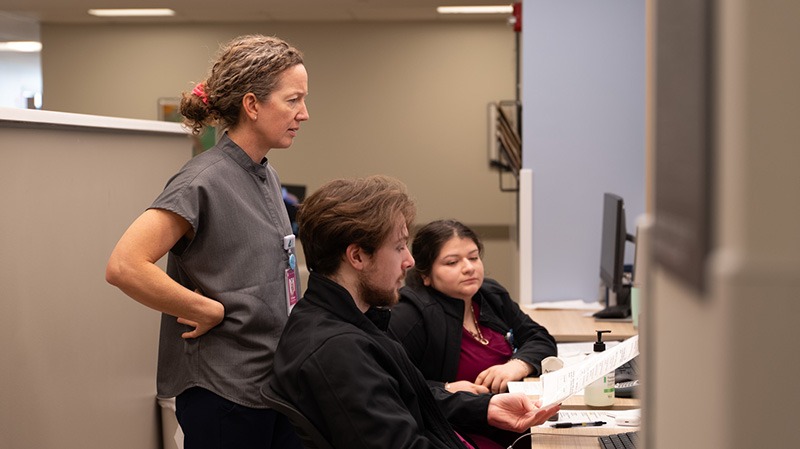
Dr. Brooke Wagen is a member of Central Health’s Supportive and Palliative Care team, providing an extra layer of support for patients in Travis County with low income who are going through chronic illnesses. She is also a graduate of Dell Medical School at The University of Texas at Austin. Read Dr. Wagen’s story here.
“Providing direct specialty care has been a game-changer,” Dr. Lee said. “It’s what our residents deserve, and now it’s what we’re delivering.”
More care for more patients
The impact of these new services means fewer emergency room (ER) visits, better outcomes, and a more seamless care journey for patients. In FY 2026, as other Federally Qualified Health Centers (FQHCs) face cuts, Central Health is stepping up with a record $98.8 million investment in CommUnityCare to safeguard access and double down on primary care.
Central Health’s investment will help pay for care for more than 600,000 patient visits next year, including expanded services such as optometry and dentures, along with stronger collaborations on mental health and substance use care.
Between the thoughtful, deliberate strategic planning and system alignment, Central Health has already reduced inefficient and costly duplication and improved coordination across the system that’s expected to serve 209,000 people through 1.25 million visits in FY 2026 with CommUnityCare, Sendero Health Plans, and other contracted providers. Next year, Central Health will directly employ 309 providers and connect patients to a network of more than 11,000 providers.
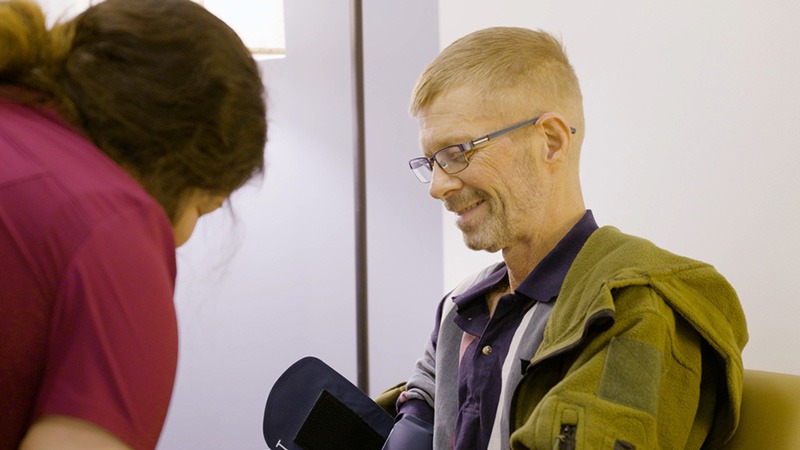
Steve Nelson, Central Health’s first palliative care patient. Innovative program provided lifesaving treatments, financial support, transportation, and assistance with disability applications. You can read Steve’s story here.
“We have loved our collaboration with Central Health. Dr. Lee has been great at talking with us, planning, and trying to even strategize on ways to expand our efforts. I want you to know that the people in Eastern Travis County area are some of the people in most need of health services and health care, and we want to continue to expand those efforts,” explained Community Collaboration for Health CEO and Founder Dr. Charles Moody.
“We have loved our collaboration with Central Health.”
– Dr. Charles Moody, CCH

Building bridges for the unhoused
Central Health is expanding innovative programs that meet people where they are and keep them connected to care. The new Medical Respite Center offers people experiencing homelessness a safe place to recover after a hospital stay, providing short-term medical care that prevents avoidable readmissions and supports long-term healing.
“They take it from the beginning to the end. They brought me through it,” said Fletcher Jones, a former resident of the respite center. “Now I’m just waiting on my own key to go to my own place I can call home. It works if you’ve got the right staff like Central Health’s got.”
“Our Transitions of Care program is truly groundbreaking,” said Central Health Chief Medical Officer Dr. Alan Schalscha. “We make sure patients aren’t left to navigate the system alone. Whether moving from the hospital to a skilled nursing facility, into respite care, or ultimately back home—where everyone wants to be—we address both medical and social needs. That reduces dangerous gaps in care, improves safety, and helps residents regain stability during their most vulnerable moments.”
Through the Bridge Clinic, Central Health partners with Austin/Travis County Emergency Medical Services to provide comprehensive and immediate acute, chronic, and preventative care for people who are unhoused. By offering immediate access to primary and behavioral health care, the clinic helps patients stabilize quickly, avoid unnecessary hospitalizations, and connect with ongoing care tailored to their needs.
“We talk about mental health barriers. We talk about substance abuse barriers. We talk about chronic homelessness, being homeless for over 10 years. We talk about lack of access to technology. How do you survive in these times outside? Central Health was probably one of the better things that happened to our community,” said Hungry Hill Foundation Executive Director Chase Wright.
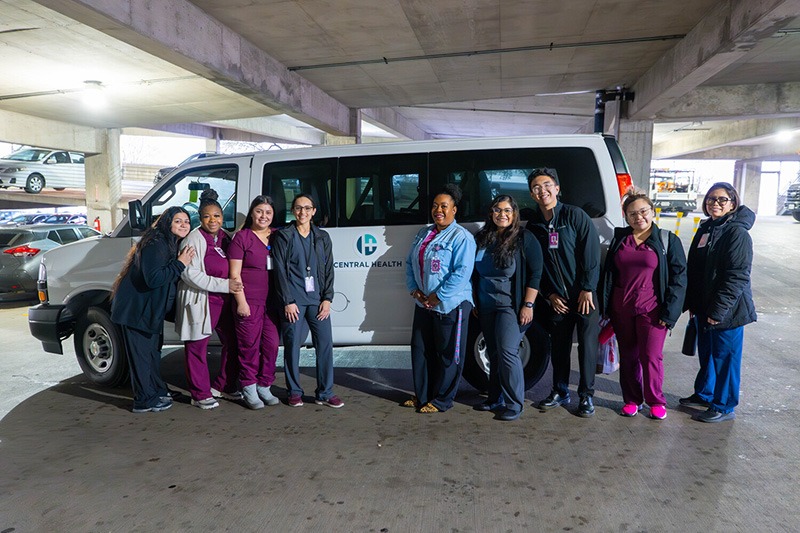
A team from the Central Health Bridge program poses beside their mobile clinic van, a key piece of the effort to bring acute, chronic and preventive health services directly to people experiencing homelessness across Travis County. Learn more about the Bridge Clinic.
Community partnerships that matter
Historically, Central Health has served as both a connector and a funder, using contracted partnerships to expand access to care. These trusted relationships have always been the backbone of transformation, and in FY 2026, as federal funding becomes less predictable, they will play an even greater role in sustaining essential services. Central Health’s budget reflects this commitment, investing:
- $34 million in Integral Care, including $9 million for psychiatric emergency services and the Herman Center.
- $33.4 million in services for people experiencing homelessness, including a new 50-bed Medical Respite Center.
- $3.2 million for musicians through the Health Alliance for Austin Musicians (HAAM) and the SIMS Foundation.
- $35 million for Dell Medical School, with tighter tracking of services provided to Central Health patients.
“The impact of Central Health’s programs is profound,” said Health Alliance for Austin Musicians (HAAM) Chief Strategy Officer Rachel Blair. “Because of (Central Health’s) premium assistance program alone, more than 1,200 musicians have access to affordable, high-quality coverage.”
The Central Health Assistance Program (CHAP) is an innovative insurance premium assistance program that gives Medical Access Program (MAP) members with serious health challenges the option to transition into Sendero Health Plans coverage. Through CHAP, Central Health covers the cost premiums while leveraging the Affordable Care Act’s Risk Adjustment Program to bring more resources into the local safety-net. This ensures that some of the most medically complex patients receive consistent, high-quality care while maximizing the impact of local tax dollars.

Kelsi Creek, a member of Health Alliance for Austin Musicians (HAAM), is an outspoken artist who advocates at every opportunity for the essential services provided by this longstanding partner agency. Read Kelsi’s story here.
“The impact of Central Health’s programs is profound.”
– Rachel Blair, HAAM

“The Central Health premium assistance program is a game changer for our community,” said Sendero Health Plans CEO and Central Health Executive Vice President Sharon Alvis. “By making it possible for some of the sickest and most vulnerable patients to choose to move into comprehensive insurance coverage, we’re not only improving individual health outcomes but also strengthening the entire safety-net system for Travis County.”
Financial strategy: building for the long term
Central Health’s ability to fund its ambitious strategic plan and its partners in these ways didn’t happen overnight or with a single decision. Through years of disciplined financial planning and by understanding the need for expanding services, Central Health built up reserves to fund the anticipated growth required to meet the increasing demands. Rising interest rates grew those reserves further, giving Central Health flexibility to respond quickly to urgent needs and invest in the long-term transformation of the system.
Today, even as federal and state funding remains uncertain, Central Health’s fiscal stewardship ensures stability for services and protection for taxpayers.
Leadership that listens
In 2025, Central Health Board of Managers Chair Ann Kitchen played a key role in guiding this transformation. Appointed in 2022 during the uncertainty of the COVID pandemic, the former Austin City Council member’s leadership had immediate effect.
Under her direction, the board carried the 2022 strategic plan forward, forged ahead with the plan to integrate the Central Health system, adopted tight budgeting practices, and engaged in heightened community outreach and engagement that earned public confidence.
“I want to commend the entire team, and I will start with the board chair,” Travis County Commissioner Jeff Travillion said. “Oftentimes, when we have disagreement, or when we have conflict, it stops everything. But I don’t think when we disagreed, that it stopped anything. It made us talk more. It made us clarify things.”
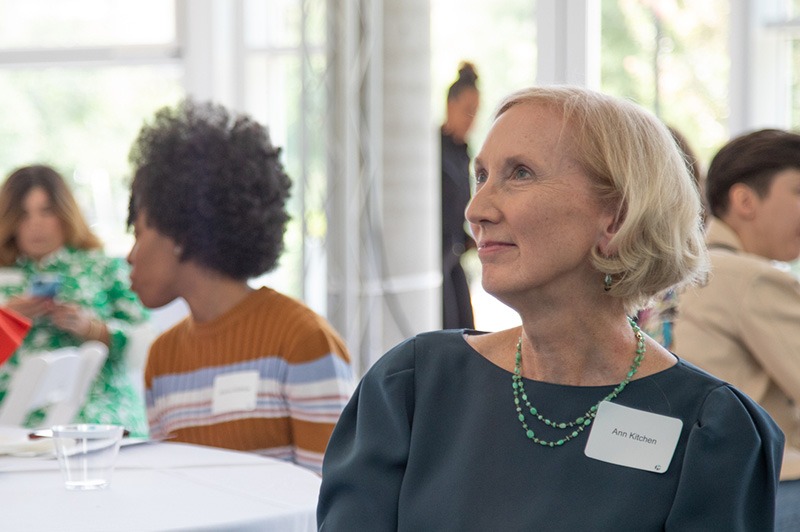
Central Health Board of Managers Chair Ann Kitchen.
Chair Kitchen regarded September’s success as a sign that Central Health was headed down the right path.
“This budget is about building a health system worthy of our community,” she said. “One where every Travis County resident has the chance to live a healthier, fuller life.”
Accountability through outcomes
Central Health is measuring success not just in dollars invested, but in outcomes. Fiscal Year 2026 goals include:
- Reducing appointment wait times to two weeks or less.
- Decreasing avoidable ER visits and readmissions by 10%.
- Improving patient experience through better communication and coordinated care
- Expanding coverage to reach 5% more unique patients.
The cost of doing nothing
What if Central Health chose to maintain the status quo and not expand services, increase access, or provide funding for partners? What if Central Health did…nothing?
The Episcopal Health Foundation estimated in a recent study that health disparities cost Travis County more than $1.1 billion annually in preventable illness, lost productivity, and early deaths. According to the report, doing nothing means allowing people—especially in communities of color east of I-35—to die up to 20 years earlier than people living just five or 10 miles west.
“Doing nothing means allowing active harm to the community,” Dr. Lee said. “Doing nothing is never an option. The path forward requires a systemwide response. We must move beyond fragmented care toward integrated solutions.”
A model for public health systems
Central Health’s progress shows what’s possible for communities working toward more equitable health care. The district built its foundation through disciplined, long-term planning—a seven-year strategy driven by data, community input, and measurable goals. By pinpointing the biggest care gaps and directing resources to close them, Central Health demonstrated how public hospital districts can shift from reacting to crises to driving proactive, systemic change.
Community driven; partner supported
That transformation has also been fueled by outreach and partnerships. Central Health invested heavily in listening to residents, engaging trusted community voices, and strengthening collaborations with organizations such as Integral Care, HAAM, and the Black Men’s Health Clinic, among numerous others. These partnerships emboldened Central Health’s reach into areas often overlooked—like behavioral health and housing—and showed how addressing social and economic factors alongside medical care could lead to better health outcomes.
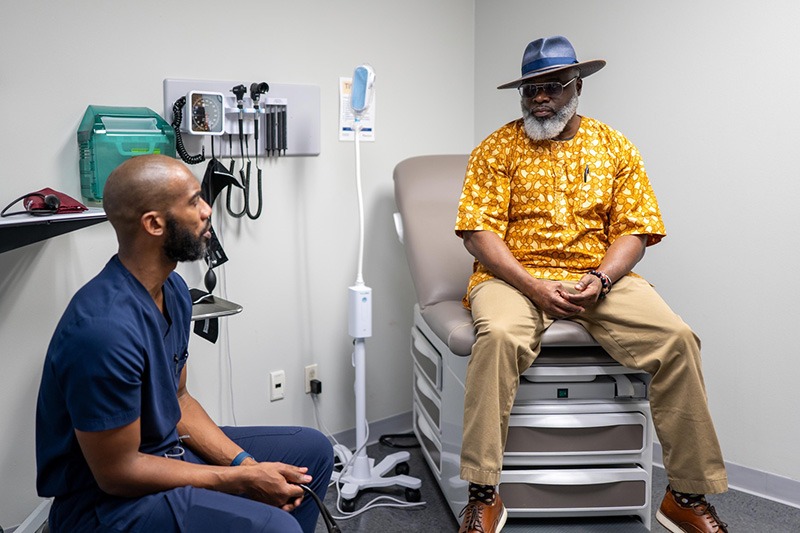
Robert Lilly is a patient of the Black Men’s Health Clinic as well as an advocate for the unique services this partner agency provides. Central Health’s partnership with the clinic helps to ensure more men like Robert have access to culturally competent care that fits his needs, and those of other men like him. Read Robert’s story here.
Equally important has been Central Health’s financial discipline and willingness to adopt non-traditional approaches. Years of planning and building reserves created the ability to respond to urgent needs without overburdening taxpayers. Legislative advocacy secured expanded authority to hire physicians directly, enabling Central Health to build specialty service lines from the ground up. Together, these practices prove with vision, accountability, and bold action, that public health systems can evolve to meet their communities where they are, earning public trust and delivering results.
“Through the relationships and partnerships (with Central Health and CommUnityCare), we’re able to provide a safe space of healing, restoration and hope for all men of color, regardless of their insurance status or inability to pay. I’m pleased to report that there’s been a significant difference in the lives of men and families that we serve,” said Black Men’s Health Clinic Founder and CEO Larry Wallace Sr. “Men of color are probably the most difficult population to reach, and we spend quite a bit of time developing those relationships.”
“I’m pleased to report that there’s been a significant difference in the lives of men and families that we serve.”
– Larry Wallace, Sr., Black Men’s Health Clinic
Looking ahead: the Year of Access
As Central Health enters the “Year of Access,” it is becoming a true health care system—hiring doctors, opening clinics, strengthening ties with CommUnityCare and Sendero Health Plans, and building new partnerships to meet the community’s full range of health needs.
The FY 2026 budget vote marked a turning point. County commissioners’ unanimous approval affirmed Central Health’s clearest vision yet: a unified safety-net system investing $1.1 billion in FY 2026 to deliver more equitable health care across the county.
“Central Health is more than a safety-net—we are building the foundation for a healthier, more equitable Travis County. In hospitals, respite care or on the streets, we meet people where they are and create pathways to dignity, stability, and healing,” Dr. Lee said. “No other organization is better positioned to drive the generational change our community deserves. And with our partners, we will make health equity real.”
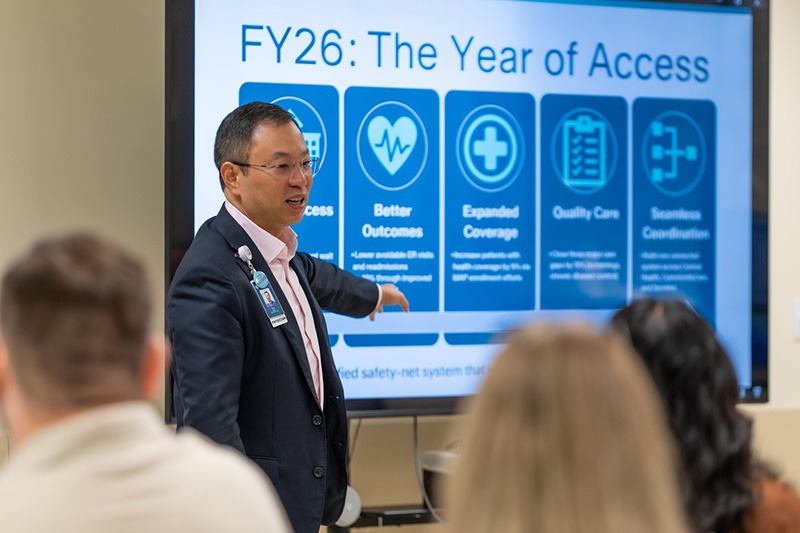 .
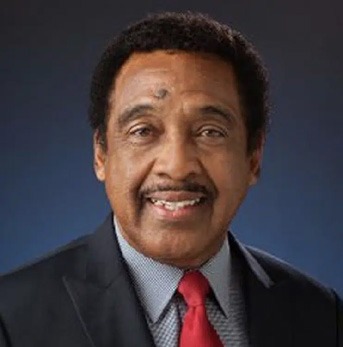
.Central Health President and CEO Dr. Pat Lee met with 18 community leaders in August to discuss Central Health’s Fiscal Year 2026 budget priorities, community health initiatives, and investments in health care delivery.