Healing, One Brushstroke at a Time
May 15, 2026
Recovery helped Armando Vences reconnect with his family, his art, and himself.
There was a time in Armando Vences’ life when all he cared about was drinking.
Then alcoholism ruined his work and destroyed his most important relationships. He lost his house. Eventually, it came for his health, too.
One day he found himself covered in blood on the floor. When he woke up next, he was in the hospital. A bright light was staring him in the face.
“I was scared,” Vences, 44, said. “I was terrified.”
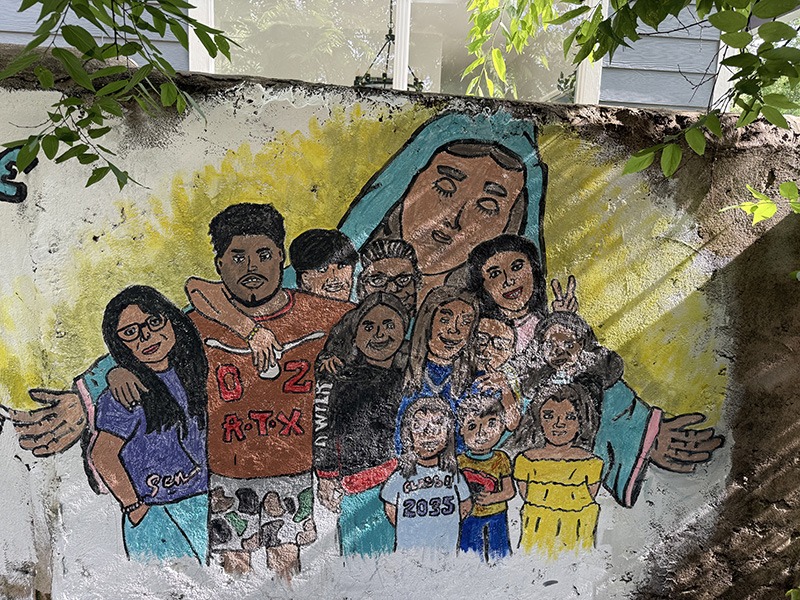
After he was discharged, he grabbed a brush, a bucket of paint and walked to the backyard of his parents’ home in East Austin, where a corrugated metal fence covered the property.
He started painting.
First came illustrations of football players from The University of Texas. His favorites. Then it hit closer to home. Family members. His son. The Virgin Mary.
Armando never used to talk about his pain. He always used to hide it. It’s what he thought a man should do.
But after that stint in the hospital due to severe liver damage, a case manager helped him enroll with Central Health MAP (Medical Access Program), a health coverage option for those with low income. Armando began to realize that he could control his life in a meaningful way. He began working through his pain with a behavioral health therapist, a psychiatrist, and a palliative care specialist at Central Health.
Now, he sees a world full of opportunities.
Where It All Began
Armando was born and raised in East Austin, back when it was still “weird,” he says.
He didn’t graduate high school but soon had three children and needed to pull his weight. When he was 18, he started working in underground utilities, which included piping gas lines for new subdivisions across Austin. There was a stretch when he oversaw his crew and acted as the site lead.
Drinking caught up to him in his 40s. By then, alcoholism took hold. He’d miss work and try to make up with a double. He lost key relationships and a house in Elgin. He continually pushed people away.
“People called me a grouch,” he said. “I was negative. I was never positive.”
A pivotal inflection point
Reality hit Armando in the face early 2025. One day, already full into a day of drinking, he began throwing up blood.
He hid it initially, but then it kept happening—a big cough, and then blood. A couple days later, he threw up again, only this time he slipped and hit his head on a sink. An ambulance arrived and Armando was rushed to the hospital.
When he woke up, he said, he experienced a revelation.
“I thought to myself, ‘This is it,’” he said. “If I continued, I wouldn’t live for six more months. I’m trying to be here for my kids.”
Moving forward in life
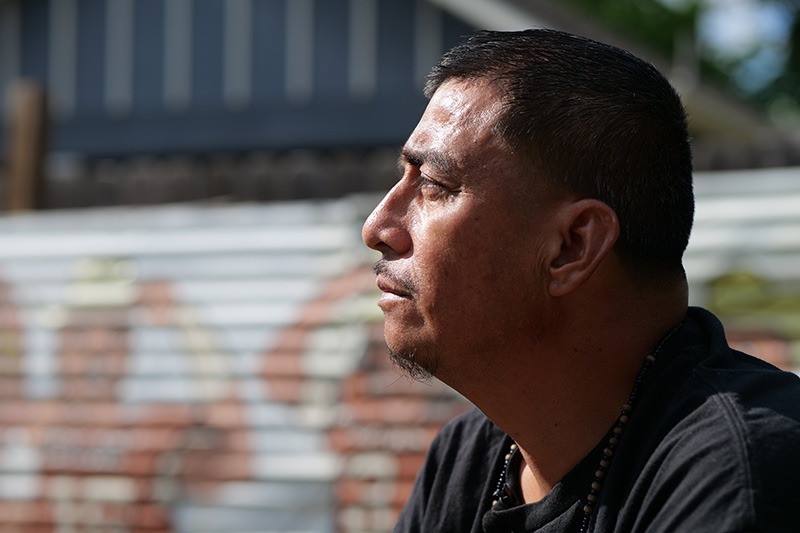
Armando’s transformation began with that medical intervention.
The next step was enrolling with MAP and finding a primary care provider with CommUnityCare Health Centers. A case manager helped him with a benefits application, sent a disability services referral, and set up transportation options to navigate housing instability. A community health worker scheduled an appointment for him to see an addiction medicine specialist at the Central Health Capital Plaza Specialty Clinic.
To get this done, Armando relied on the Central Health system, which comprises Central Health, CommUnityCare Health Centers, and Sendero Health Plans.
“He’s been a part of our multi-specialty clinic and cared for by multiple providers and always has been very open and interested in learning how he can better care for himself,” said Christine Celio, an advanced practice nurse with Central Health’s supportive and palliative care team.
Through one-on-one work, medication management and commitment, Armando committed to recovery.
“It’s all mental, and that’s why I loved going to Central Health,” Armando said. “Because they helped me with that problem—having emotions I didn’t know about. I knew I had something wrong with me, but they could put a name on it.”
What’s next for Armando
In the meantime, Armando has found a steady job as a maintenance worker for a brick company. He’s cultivated better relationships with family members and those close to him.
His goal now is to finish all the things he wasn’t able to do the first time because of drinking.
Like working toward his GED. And painting.
“Drawing to me is great meditation,” he said. “It calms me down and helps my anxiety go away.”
Armando’s biggest goal remains a professional one: he wants to become a substance abuse counselor. He wants to help others who are going through challenges he’s experienced.
“I feel like the sky is the limit for him,” Celio said.
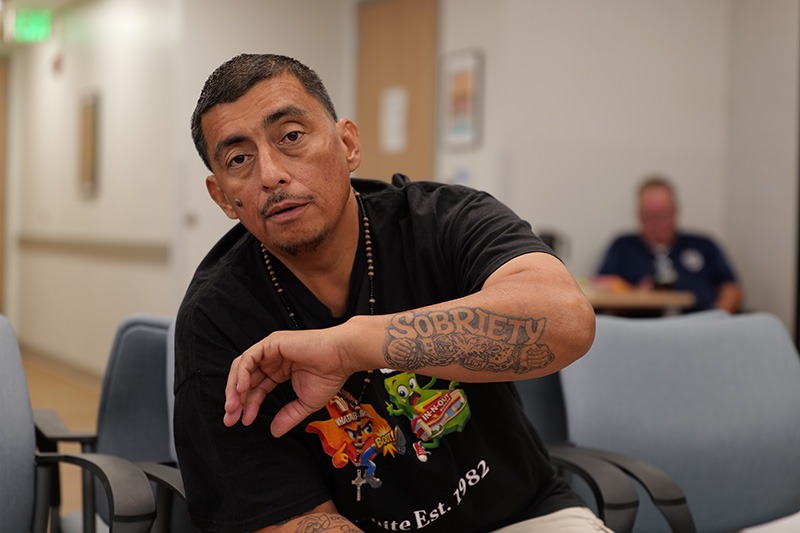
Best of all, Armando says, there are no regrets anymore. Most days, he sits down after work and shares his thoughts in a journal. He’s filled five books cover-to-cover, the sixth ongoing. He’s been receiving health care for just over a year now. “I’m happy,” he said. “I’m in a great place. My mind is in a good place.”